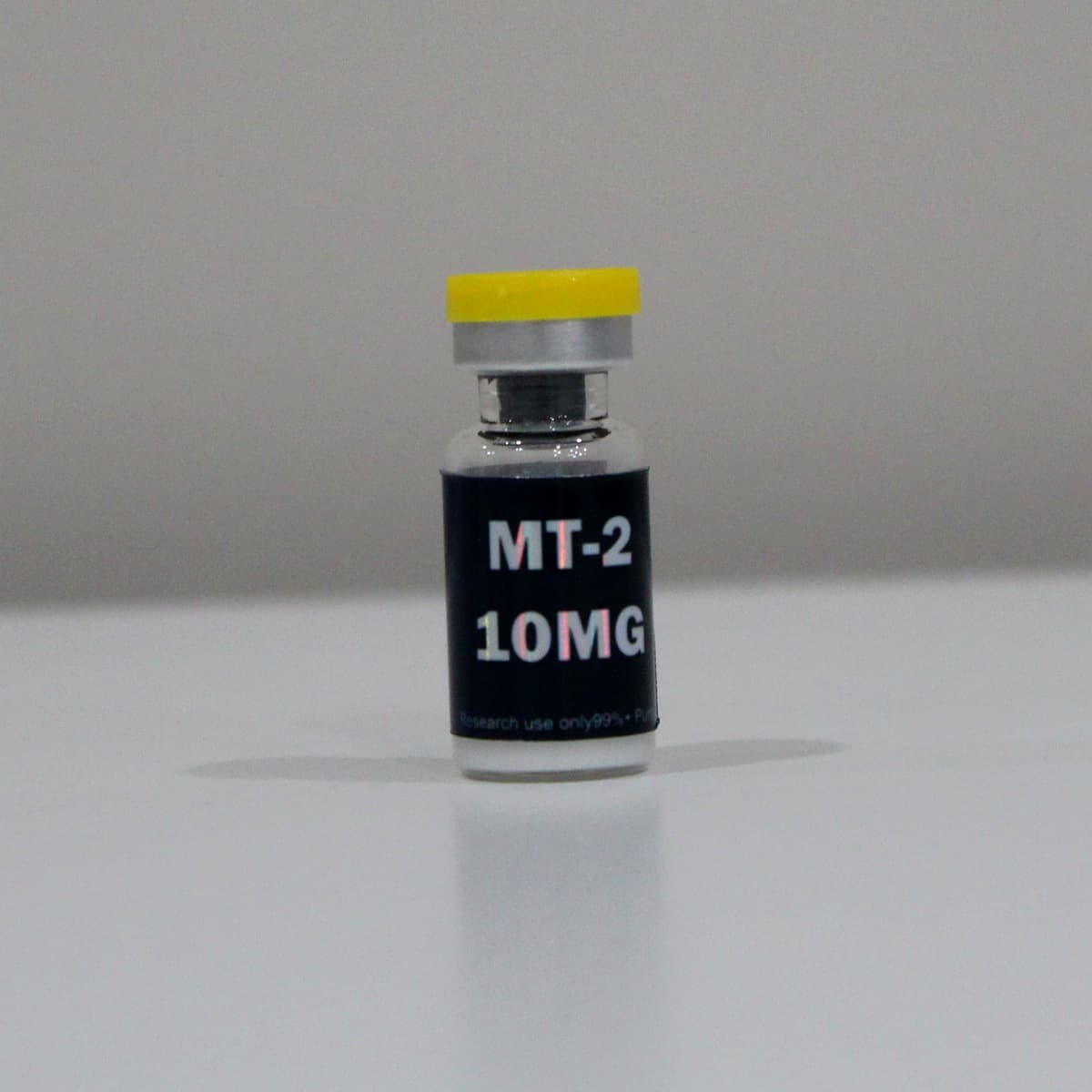
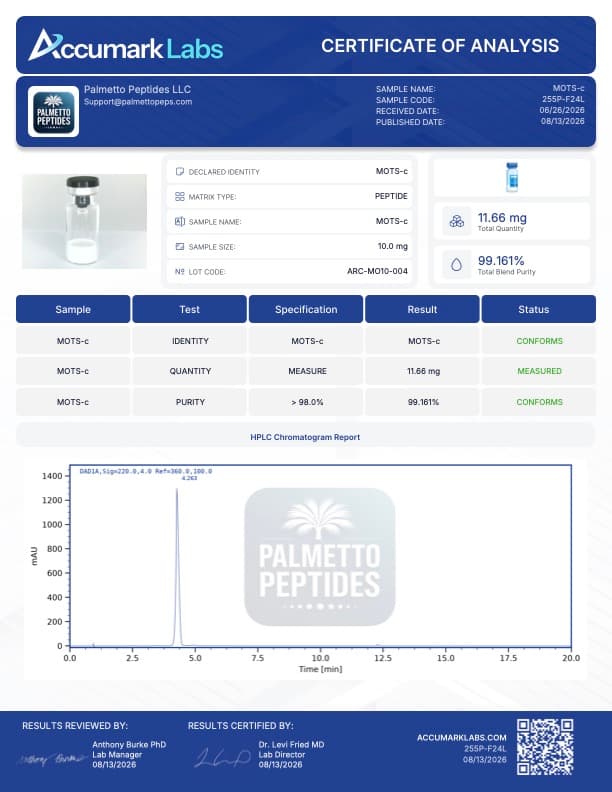
Mitochondrial Peptide · Metabolic & Exercise Research · COA Verified
For research and laboratory use only. Not for human consumption. By purchasing, you confirm you are a qualified researcher.
For Research Purposes Only. Not approved for human consumption.
MOTS-C is a 16-amino acid mitochondrial-derived peptide encoded by the mitochondrial genome — one of the first mitochondria-encoded peptides discovered to act as a systemic hormone. It plays a fundamental role in metabolic regulation, insulin sensitivity, and exercise adaptation. Research has documented MOTS-C's ability to translocate to the nucleus in response to metabolic stress, directly regulating gene expression related to energy homeostasis. Its levels decline with age, making it an important compound for aging biology and metabolic research.
Q: What makes MOTS-C unique among research peptides?
A: MOTS-C is one of the only peptides encoded by the mitochondrial genome rather than nuclear DNA. This origin gives it a unique signaling role at the intersection of mitochondrial and cellular metabolism.
Q: What does MOTS-C do in research models?
A: Regulates glucose and lipid metabolism, improves insulin sensitivity, enhances exercise capacity, and translocates to the nucleus during metabolic stress to regulate gene expression.
Q: How does MOTS-C relate to aging?
A: MOTS-C levels decline with age. Research explores whether this decline contributes to age-related metabolic dysfunction and whether MOTS-C supplementation in models can restore metabolic parameters.
Related Research: NAD+ Research Peptide | Metabolic Research 2026 | SS-31 (Elamipretide) Research Peptide | AOD-9604 Research Peptide
For laboratory research use only. Not for human consumption. Not evaluated by the FDA.
| Lot # | Size | Test Date | COA |
|---|---|---|---|
| ARC-MO10-004 | 10mg | Jun 26, 2026 | View PDF |