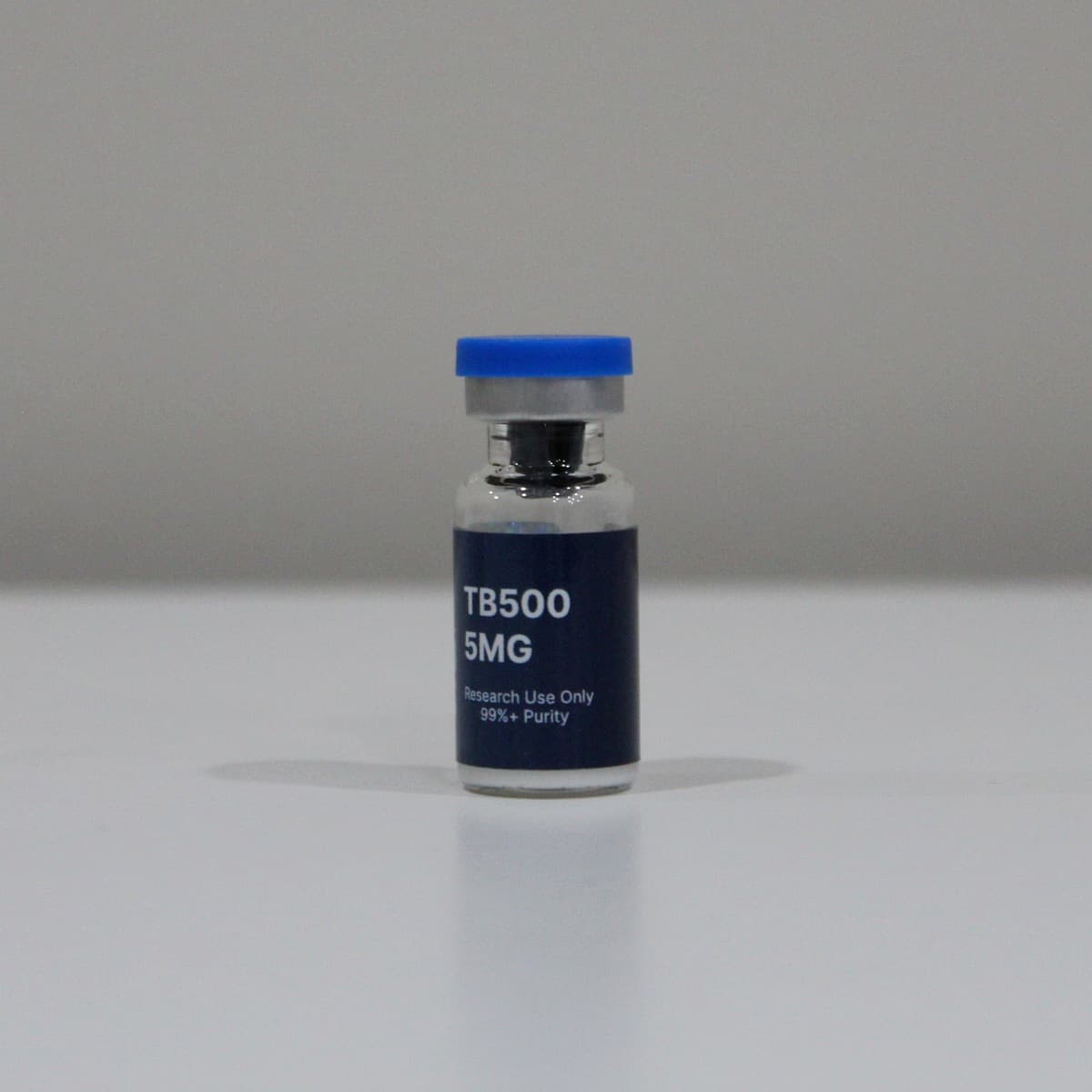
Thymosin Beta-4 Fragment · Tissue Repair Research · COA Verified
For research and laboratory use only. Not for human consumption. By purchasing, you confirm you are a qualified researcher.
This is part of the BPC-157 + TB-500 Wolverine Stack 10/10mg
Save $20.00 by getting the full stack instead of this item alone.
For Research Purposes Only. Not approved for human consumption.
TB-500 is a synthetic version of the active region (amino acids 17-23) of Thymosin Beta-4, a naturally occurring 43-amino acid peptide found in virtually all human and animal cells. Thymosin Beta-4 plays fundamental roles in actin polymerization regulation, cell migration, angiogenesis, and wound healing. TB-500 retains these core biological activities while being small enough for practical research use. It has been extensively studied for effects on tissue repair, inflammation modulation, and cellular migration in multiple tissue types.
Q: What is Thymosin Beta-4 and how does TB-500 relate?
A: Thymosin Beta-4 is a 43-AA peptide found in all cells. TB-500 represents amino acids 17-23, the region believed responsible for most biological activity.
Q: How does TB-500 work mechanistically?
A: TB-500 binds actin and regulates its polymerization. This affects cell migration, angiogenesis, and wound healing. It also has anti-inflammatory effects independent of actin binding.
Q: How does TB-500 compare to BPC-157?
A: TB-500 works more broadly on actin regulation and systemic tissue remodeling; BPC-157 focuses on localized tissue repair through GH receptor and NO pathways. Many researchers combine them.
Related Research: BPC-157 Research Peptide | BPC-157 + TB-500 Wolverine Stack | BPC-157 + TB-500 Wolverine Stack | Hexarelin Research Peptide | Ipamorelin Research Peptide | What Is a COA? | How to Store Research Peptides | BPC-157 vs TB-500
For laboratory research use only. Not for human consumption. Not evaluated by the FDA.
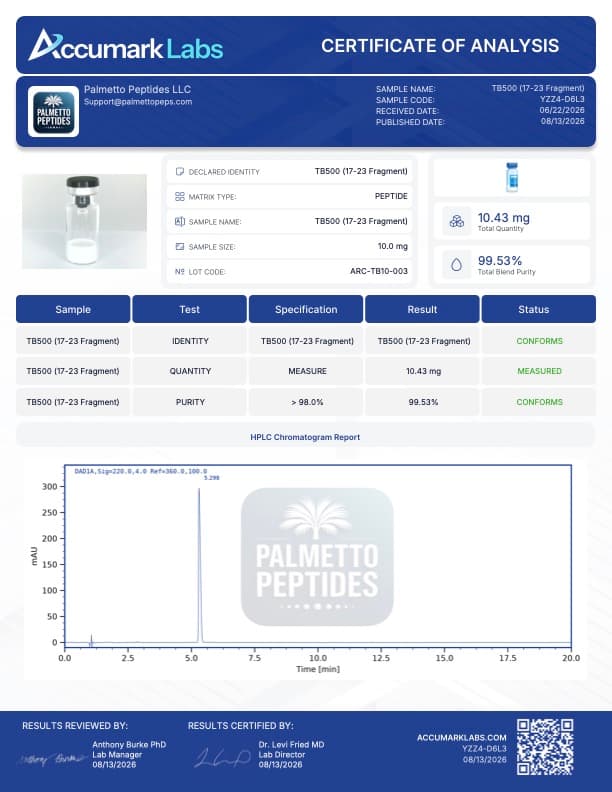
| Lot # | Size | Test Date | COA |
|---|---|---|---|
| ARC-TB10-003 | 10mg | Jun 22, 2026 | View PDF |