For research and laboratory use only. Not for human consumption. By purchasing, you confirm you are a qualified researcher.
For Research Purposes Only. Not approved for human consumption.
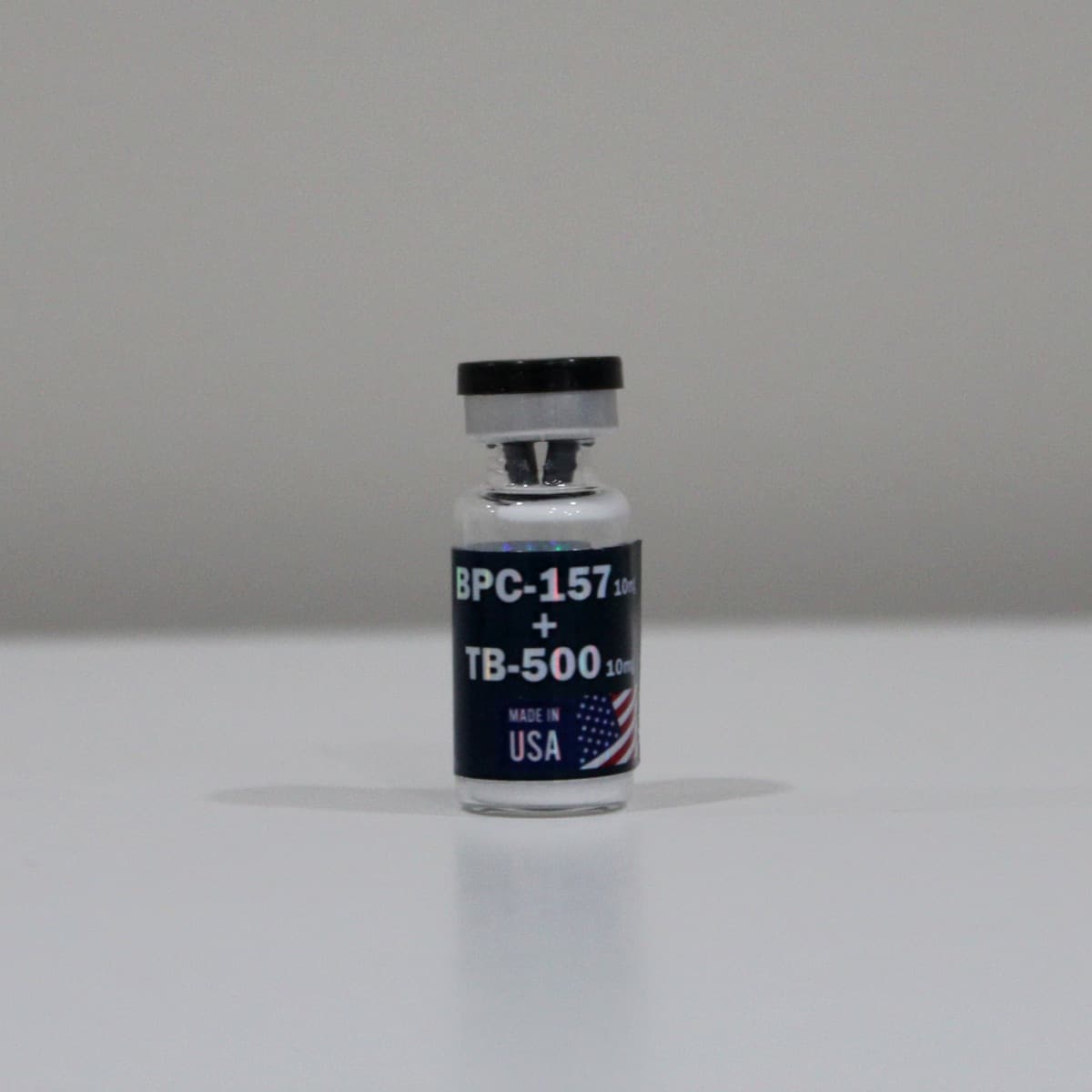
The Wolverine Stack pairs the two most-studied tissue repair peptides in research biology. BPC-157 works through GH receptor and nitric oxide signaling for localized tissue repair; TB-500 (Thymosin Beta-4 active region) works through actin polymerization and cell migration for systemic tissue remodeling. Together they cover complementary repair mechanisms — widely used in musculoskeletal, wound healing, and regenerative biology research.
This blend combines two separately studied research peptides. The papers below examine BPC 157 and thymosin β4 in published laboratory and preclinical models. These citations describe published research; they are not instructions for human use and do not imply that this product is a medicine.
Q: Why combine BPC-157 and TB-500?
A: They target complementary repair pathways. BPC-157 focuses on GH receptor and NO signaling; TB-500 on actin regulation and cell migration. Together they provide broader tissue repair mechanism coverage.
Q: What is TB-500?
A: A synthetic peptide representing the active region of Thymosin Beta-4 (amino acids 17-23 of the naturally occurring 43-AA peptide) believed responsible for most of its biological activity in research models.
Q: Can these be used in the same protocol?
A: Yes. Each is reconstituted separately per standard research protocol.
Related Research: BPC-157 Standalone | TB-500 Standalone | Wolverine Stack Complete Guide | Wolverine Stack Research Overview | BPC-157 vs TB-500 | What Is BPC-157? | What Is TB-500?
For laboratory research use only. Not for human consumption. Not evaluated by the FDA.
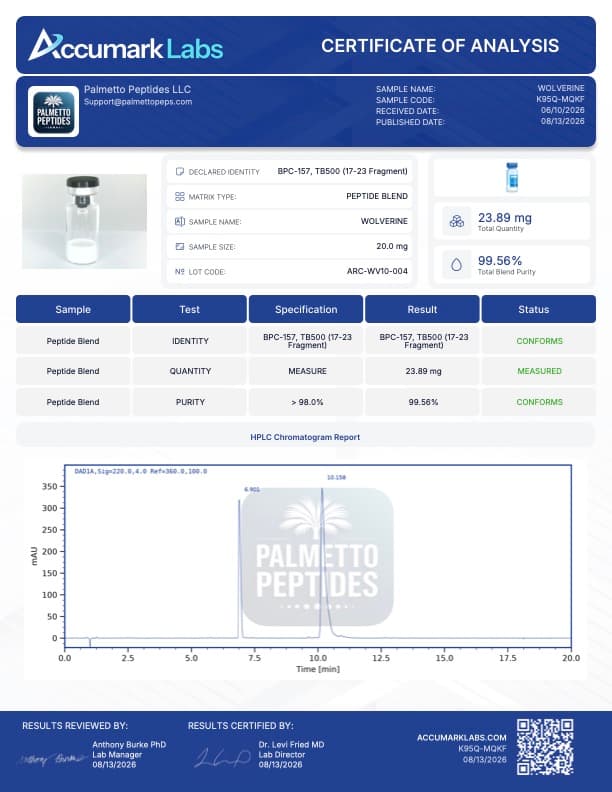
| Lot # | Size | Test Date | COA |
|---|---|---|---|
| ARC-WV10-004 | 20mg | Jun 10, 2026 | View PDF |