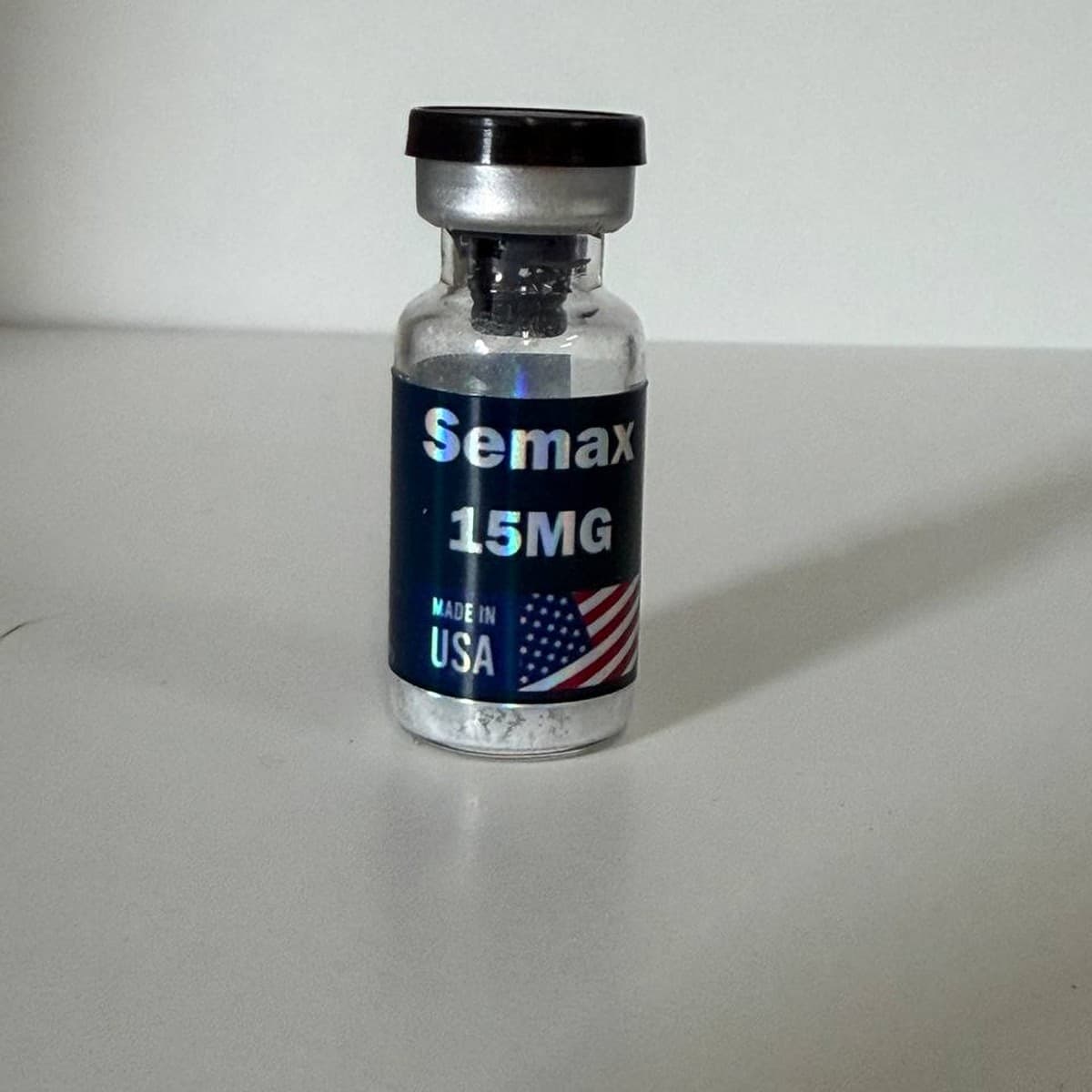
Nootropic & Neuroprotective Research · COA Verified
For research and laboratory use only. Not for human consumption. By purchasing, you confirm you are a qualified researcher.
For Research Purposes Only. Not approved for human consumption.
Semax is a synthetic heptapeptide (Met-Glu-His-Phe-Pro-Gly-Pro) originally developed in Russia based on the adrenocorticotropic hormone (ACTH) fragment 4-10. Unlike ACTH, Semax lacks hormonal activity but retains potent neuroprotective and cognitive-enhancing properties in research models. It has been extensively studied for effects on brain-derived neurotrophic factor (BDNF), serotonin metabolism, and cerebral blood flow. Semax does not bind to classic monoamine receptors, instead working through gene expression changes and neurotrophic factor regulation.
Semax has been studied in rodent models of gene expression, including BDNF-related pathways. These citations describe published research; they are not instructions for human use and do not imply that this product is a medicine.
Q: How does Semax work in research models?
A: Increases BDNF expression, modulates serotonin turnover, enhances cerebral blood flow, and alters expression of genes involved in immune regulation and neuroprotection. Does not bind monoamine receptors directly.
Q: What is BDNF and why does it matter?
A: Brain-Derived Neurotrophic Factor is a neurotrophin essential for neuronal survival, synaptic plasticity, and long-term memory formation. Semax research shows significant BDNF upregulation.
Q: How does Semax differ from ACTH?
A: Semax is derived from ACTH 4-10 but lacks the corticotropic activity. It retains neuroprotective properties without stimulating adrenal steroidogenesis.
Related Research: Selank Research Peptide | NAD+ Neuroprotection | Semax Complete Research Guide | Semax Research Guide | Semax and BDNF Expression Research | Semax Storage and Handling
For laboratory research use only. Not for human consumption. Not evaluated by the FDA.
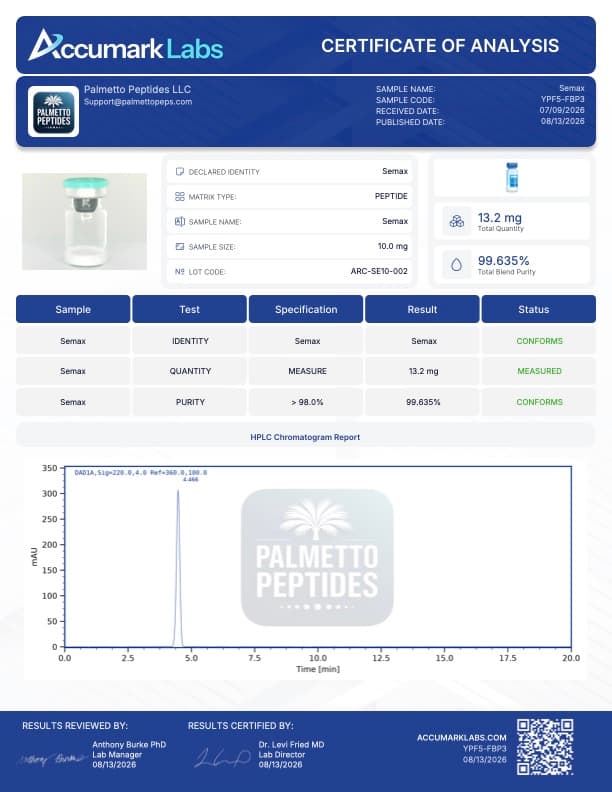
| Lot # | Size | Test Date | COA |
|---|---|---|---|
| ARC-SE10-002 | 10mg | Jul 9, 2026 | View PDF |