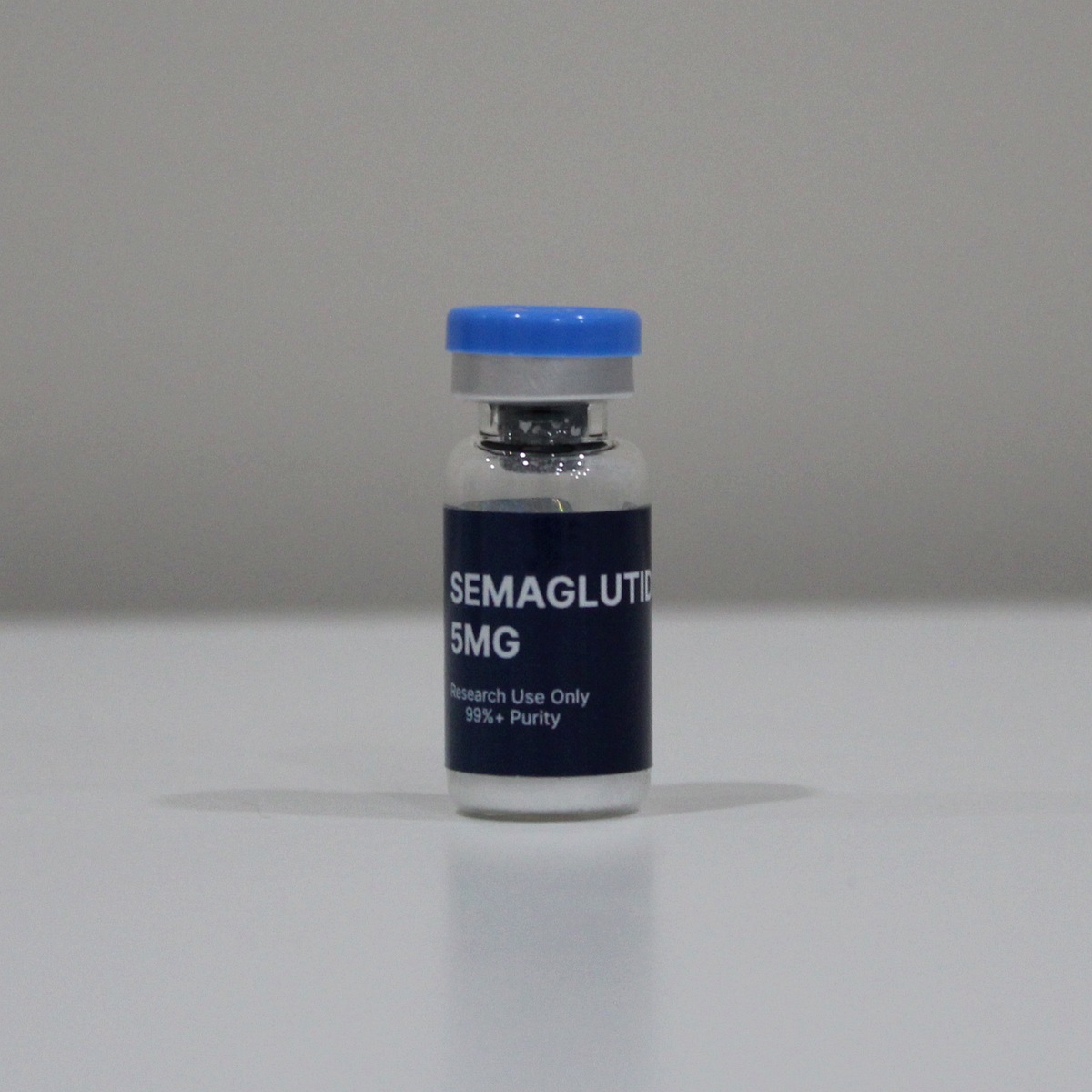
GLP-1 Agonist · Metabolic & Diabetes Research · COA Verified
For research and laboratory use only. Not for human consumption. By purchasing, you confirm you are a qualified researcher.
For Research Purposes Only. Not approved for human consumption.
Semaglutide is a long-acting GLP-1 (glucagon-like peptide-1) receptor agonist developed by Novo Nordisk, representing the current standard for single-mechanism metabolic peptide research. It mimics endogenous GLP-1 with 94% homology but with extended half-life (~165 hours) due to albumin binding via a C-18 fatty di-acid side chain. With extensive Phase 3 data across diabetes (SUSTAIN trials) and obesity (STEP trials), Semaglutide serves as a benchmark comparator for researchers studying newer metabolic peptides including Tirzepatide and Retatrutide.
Q: How does Semaglutide differ from native GLP-1?
A: 94% homology to human GLP-7-37 but with a C-18 fatty di-acid side chain enabling albumin binding. This extends half-life from minutes to ~165 hours, allowing weekly administration in research.
Q: What is Semaglutide's research significance?
A: Extensive Phase 3 data makes it the benchmark GLP-1 agonist. Researchers use it as a comparator when studying newer compounds like Tirzepatide (dual agonist) and Retatrutide (triple agonist).
Q: How does Semaglutide work mechanically?
A: Activates GLP-1 receptors in the pancreas (glucose-dependent insulin secretion), hypothalamus (appetite regulation), and GI tract (delayed gastric emptying).
Related Research: Tirzepatide Research Peptide | Retatrutide Triple Agonist | Metabolic Research 2026 | Cagrilintide Research Peptide | AOD-9604 Research Peptide | Retatrutide Complete Research Guide | Are Research Peptides Legal? | What Is a COA?
For laboratory research use only. Not for human consumption. Not evaluated by the FDA.


